
Members
Jaeseok Huh
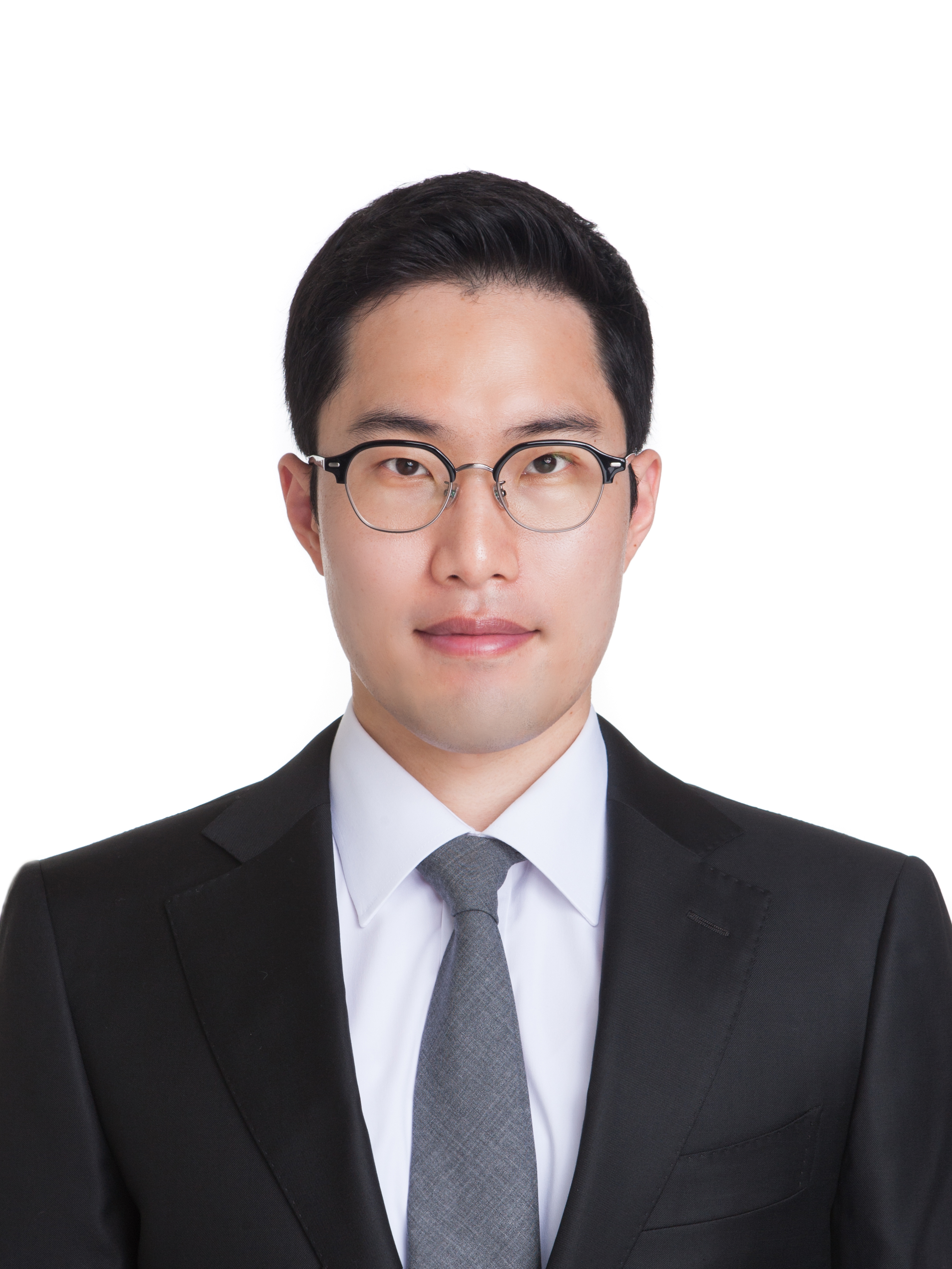
Jaeseok is an Assistant Professor in the Department of Industrial & Information Systems Engineering at Soongsil University, where he leads the Simulation-based Decision-Making Lab (SDM Lab). His research focuses on solving scheduling and optimization problems by integrating simulation, reinforcement learning, metaheuristics, and data-driven analytics to address decision-making challenges in manufacturing and industrial systems. He earned his Ph.D. from Seoul National University, where he specialized in applying machine learning and optimization techniques to complex manufacturing systems. His doctoral research, conducted under the supervision of Prof. Jonghun Park, centered on intelligent scheduling methods for semiconductor manufacturing facilities.
His research expertise spans several key areas: scheduling optimization for semiconductor and manufacturing systems, simulation-driven decision-making for performance evaluation and policy design, reinforcement learning for autonomous decision-making policies, metaheuristic algorithms including particle swarm optimization and genetic algorithms, and machine learning combined with data analytics for predictive modeling. He has made significant contributions to semiconductor packaging facility scheduling, particularly in developing deep reinforcement learning approaches that can handle large-scale scheduling problems with complex constraints such as re-entrant flows, sequence-dependent setups, and alternative routes.
With over 400 citations to his research work, Prof. Huh has published extensively in leading journals including IEEE Transactions on Automation Science and Engineering, IEEE Access, and Sustainability. His notable publications include groundbreaking work on reinforcement learning approaches to robust scheduling of semiconductor manufacturing facilities and scalable scheduling methods using deep reinforcement learning. He has also contributed to research on unmanned combat aerial vehicles, large-scale automated storage and retrieval systems, and interactive visualization of manufacturing schedules.
His lab at Soongsil University continues to advance the integration of artificial intelligence, simulation, and optimization to solve real-world manufacturing challenges, with particular emphasis on semiconductor production systems and smart factory applications. His work bridges theoretical advances in machine learning and practical industrial applications, making him a valuable contributor to discussions on optimization, AI-driven decision-making, and the future of intelligent manufacturing systems.
Jong-Han Kim
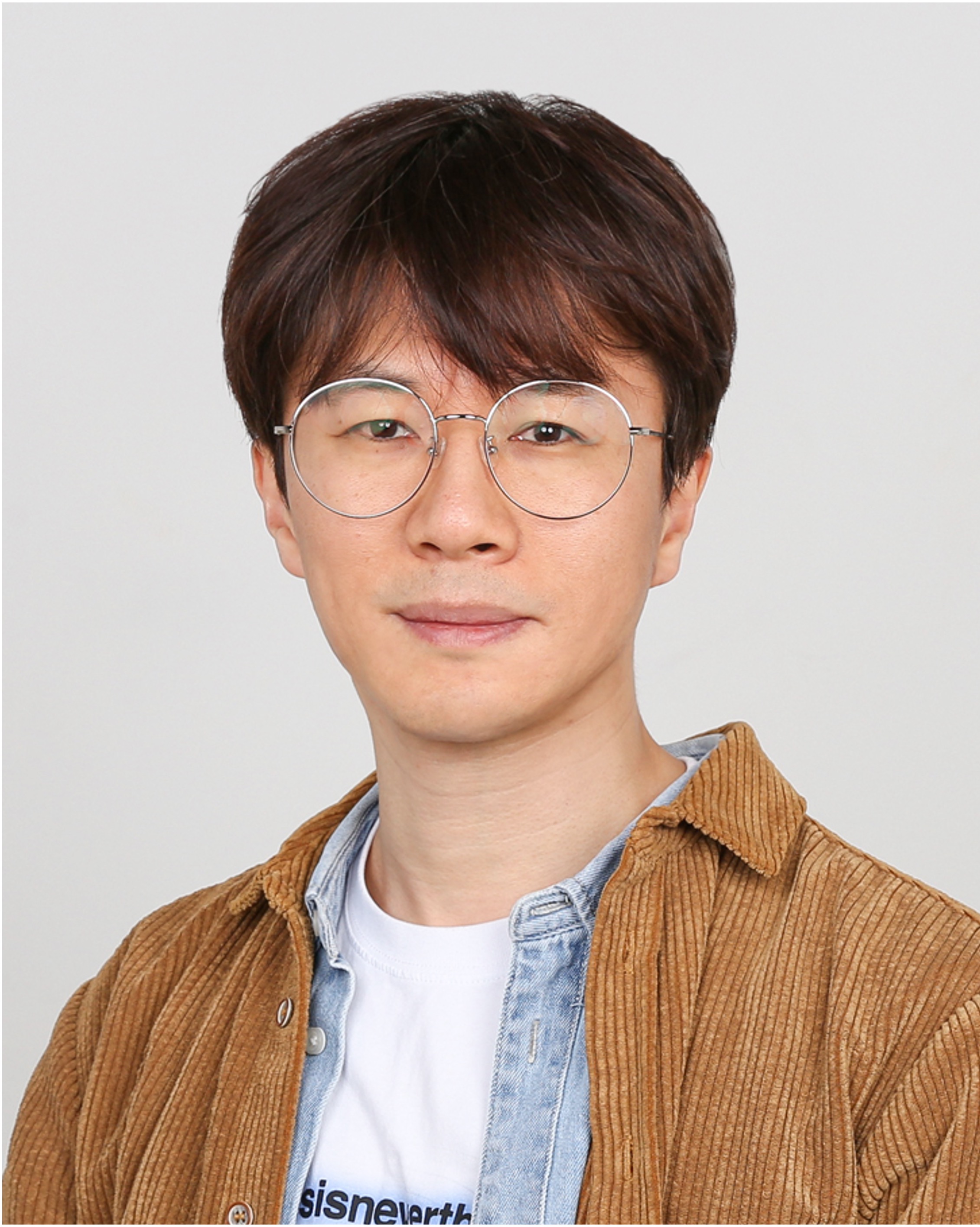
Jong-Han is an Associate Professor in the Department of Aerospace Engineering at Inha University. His research bridges control theory, optimization, and aerospace applications, with particular focus on decentralized optimal control, spacecraft guidance and control, and first-order optimization methods for real-time aerospace applications.
He earned his Ph.D. in Aeronautics and Astronautics from Stanford University, where he worked under the supervision of Professor Sanjay Lall with Professor Stephen Boyd serving as co-advisor. His doctoral research centered on decentralized and cooperative optimal control problems, developing fundamental theory for separable optimal control and quadratically invariant systems. His research expertise spans decentralized and cooperative optimal control for multi-agent systems, spacecraft attitude control and trajectory optimization using convex optimization techniques, powered descent guidance for planetary landing missions, first-order optimization methods with expansive projection for handling nonconvex constraints, and control allocation algorithms for aerospace vehicles. His work uniquely combines rigorous optimization theory with practical aerospace engineering challenges.
Prof. Kim has made significant contributions to optimal control theory, particularly in establishing conditions under which separable two-player optimal control problems admit explicit solutions. His 2015 IEEE Transactions on Automatic Control paper “Explicit Solutions to Separable Problems in Optimal Cooperative Control” provided fundamental theoretical results that have influenced subsequent work in distributed control. More recently, his research on powered descent guidance using first-order methods with expansive projection has introduced novel approaches to handling nonconvex constraints directly, rather than relying on traditional relaxation techniques like lossless convexification. His recent work on spacecraft attitude control demonstrates practical applications of convex optimization to real-world aerospace systems, developing control allocation algorithms using linear programming and quadratic programming that optimize thruster force distribution for spacecraft maneuvering.
Prof. Kim’s teaching portfolio includes courses on Optimization (ASE7030), Optimal Control (ASE6029), Machine Learning (LEO6006), Control Design (ASE3093), and foundational courses in computation and linear algebra. His research has been supported by the Korea government through multiple grants including the KSLV-II Enhancement Program, Space Challenge Program, and KRIT grant for Reusable Unmanned Space Vehicle Research. His work bridges theoretical advances in optimization and control with practical aerospace applications, making him an ideal contributor to discussions on how convex optimization fundamentals connect to cutting-edge aerospace engineering challenges.
Kihwan Choi
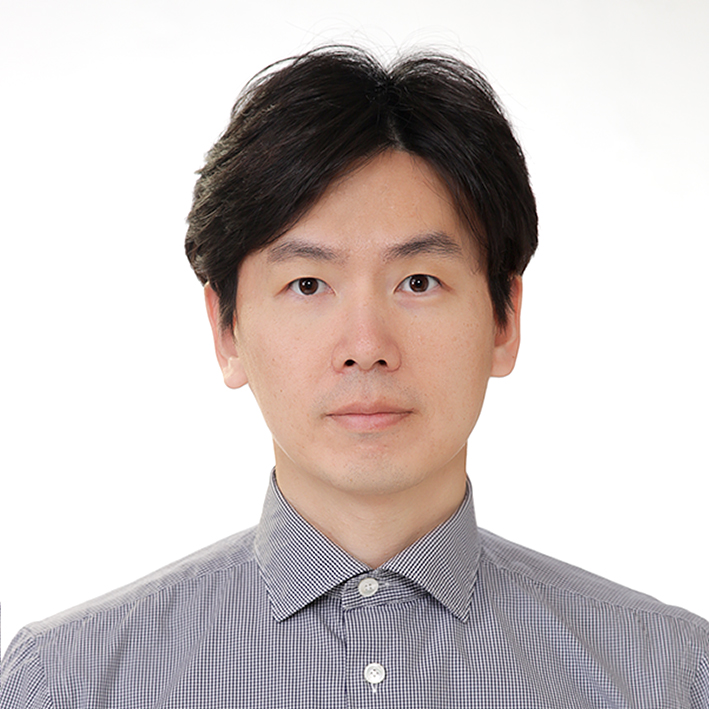
Kihwan is an Assistant Professor in the Department of Applied Artificial Intelligence at Seoul National University of Science and Technology (SeoulTech). His research focuses on developing artificial intelligence technologies for medical imaging, with particular expertise in CT imaging, endoscopy, image restoration, noise reduction, and automated diagnosis systems.
He earned his Ph.D. in Electrical Engineering from Stanford University (2014) where he worked under the supervision of Prof. Stephen Boyd and Lei Xing on compressed sensing and optimization methods for medical imaging. During his doctoral studies, he also completed an M.S. in Statistics (2012) and an earlier M.S. in Electrical Engineering (2008) from Stanford. He holds B.S. and M.S. degrees in Electrical and Computer Engineering from Seoul National University (2004, 2006). Before joining SeoulTech in 2023, Prof. Choi served as a Senior Researcher at the Korea Institute of Science and Technology (KIST) from 2017 to 2023, and as a Staff Researcher at Samsung Advanced Institute of Technology from 2014 to 2017. His industry experience includes developing AI-based medical imaging solutions and advanced optimization algorithms for clinical applications.
His research lab specializes in self-supervised learning-based image restoration and denoising techniques for low-dose CT imaging, addressing the critical challenge of minimizing patient radiation exposure while maintaining diagnostic image quality. This work overcomes the practical limitation of insufficient clinical training data by developing generalizable algorithms applicable across diverse clinical environments. Recent achievements include developing cyclic conditional diffusion models for cross-modal medical image synthesis and computer-aided diagnosis systems for colorectal cancer detection with explainable AI features to enhance clinical trust and usability.
Prof. Choi has published extensively in leading journals including Medical Physics, Expert Systems with Applications, IEEE Journal of Selected Topics in Signal Processing, and Physics in Medicine and Biology. His pioneering work on compressed sensing-based cone-beam CT reconstruction using first-order methods, developed during his Stanford doctorate, has been widely cited and influenced subsequent research in accelerated medical imaging. He has also contributed to research on brain-computer interface (BCI) platforms, AR/VR device control, and medical robotics systems.
Sunghee Yun
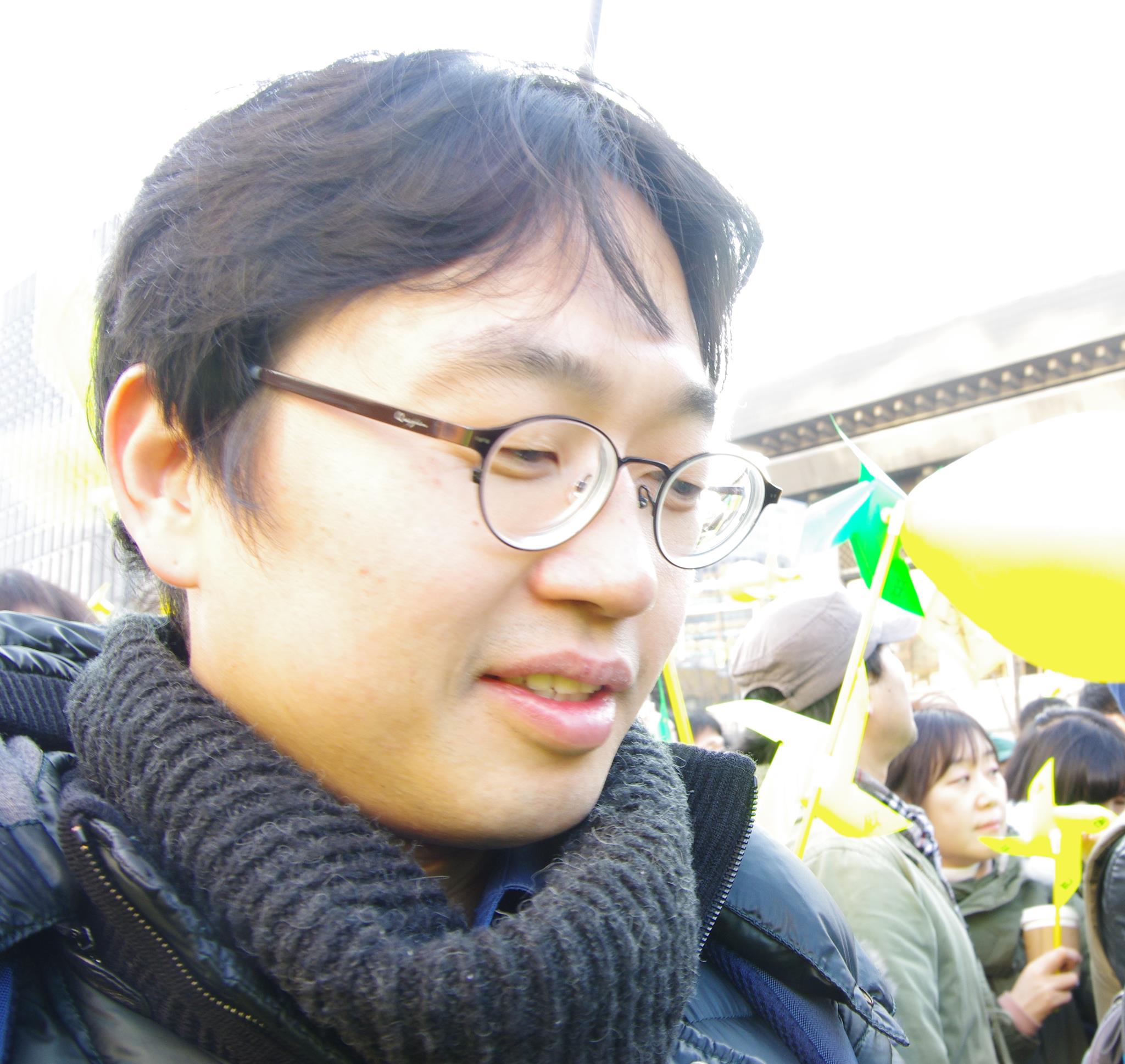
Sunghee is Co-founder & CTO @ Erudio Bio, Inc., CA, USA, Co-founder & CEO @ Erudio Bio Korea, Inc., Korea Leader of Silicon Valley Privacy-Preserving AI Forum (K-PAI), Advisor @ Korean American Semiconductor Professional Alliance (KASPA), CGO / Global Managing Partner @ LULUMEDIC, KFAS-Salzburg Global Leadership Initiative Fellow @ Salzburg Global Seminar, Salzburg, Austria, AI-Korean Medicine Integration Initiative Task Force Member @ The Association of Korean Medicine, an Visiting Professor of the Department of Electronic Engineering @ Sogang University, Seoul, South Korea, an Advisory Professor of the Department of Electrical Engineering & Computer Science (EECS) @ Daegu Gyeongbuk Institute of Science & Technology (DGIST), South Korea, Global Advisory Board Member @ Innovative Future Brain-Inspired Intelligence System Semiconductor of Sogang University, Network Expert Consultant @ Gerson Lehrman Group, Inc., Chief Business Development Officer (CBDO) @ WeStory.ai, CA, USA, and Advisor @ CryptoLab, Inc..
He earned his Ph.D. and M.S. in Electrical Engineering from Stanford University under the supervision of Professor Stephen Boyd, making him Boyd’s first Korean doctoral student. His dissertation focused on convex optimization applied to semiconductor design, establishing foundational work that continues to influence optimization applications across multiple industries. He holds a B.S. in Electrical Engineering from Seoul National University. Following his doctorate, he joined Samsung Semiconductor, where he spent 12 years in the Computer-Aided Engineering (CAE) Team, Design Technology (DT) Team, Strategic Sales & Marketing Team, and Software Research Center. During this time, he developed diverse AI and optimization tools for semiconductor chip designers, manufacturing engineers, and test engineers, including the widely-used iOpt platform—a generic AI optimization framework that remains in daily use by hundreds of Samsung engineers.
He subsequently co-founded Gauss Labs, Inc., SK Group’s first AI company, where he built and ran the US Headquarters while serving as CTO, Global Head of Research, Chief Applied Scientist, and Senior Fellow, spearheading research and development of core technologies bringing advanced optimization and AI capabilities to industrial manufacturing. This experience laid the groundwork for his current venture at Erudio Bio, where he applies the same rigorous optimization principles that revolutionized semiconductor design to the challenges of drug discovery and precision medicine. Erudio Bio’s bioTCAD platform represents a paradigm shift in pharmaceutical development, using AI and computational methods to predict drug efficacy, identify biomarkers, and accelerate the path from discovery to clinical application. His leadership at Erudio Bio has positioned the company at the forefront of AI-powered biotech innovation, culminating in significant recognition including the Gates Foundation $1 million Award and prominent speaking engagements at major international forums such as G-Bio Week 2025 and IFEZ X K-BioX ABDD Summit, where he presented on “The AI Metamorphosis - Navigating New Frontiers in Technology, Society, and Human Experience.”
Beyond his corporate and entrepreneurial ventures, Sunghee has emerged as a thought leader and educator bridging AI, optimization, philosophy, and ethics. In 2025 alone, he delivered over 53 AI special lectures, seminars, and corporate consultations across Korea, the US, and internationally at institutions including Seoul National University, KAIST, POSTECH, Korea University Business School, Stanford University, and numerous government and industry forums. These extensive interactions revealed a critical gap: most people who teach and use convex optimization lack genuine, multi-dimensional understanding of the field’s foundational concepts. This realization inspired him to establish the Convex Optimization Forum, dedicated to pursuing deeper understanding beyond mechanical knowledge. Through K-PAI, which has become widely recognized throughout Silicon Valley’s Korean community and beyond, Erudio Bio, and his various advisory roles, he continues to advance both the theoretical foundations and practical applications of AI and optimization while fostering communities dedicated to rigorous intellectual exploration. His work bridges technical excellence with humanistic inquiry—maintaining active interests in philosophy, theology, and the intersection of mathematics with consciousness and meaning-creation. His mathematical genealogy traces through Stephen Boyd back to Gauss, Euler, and Fourier, giving him an Erdős number of 3.